 Olfactionary
Why Old Books Smell Like Vanilla, the Paper Is Slowly Decaying, and That's the Point
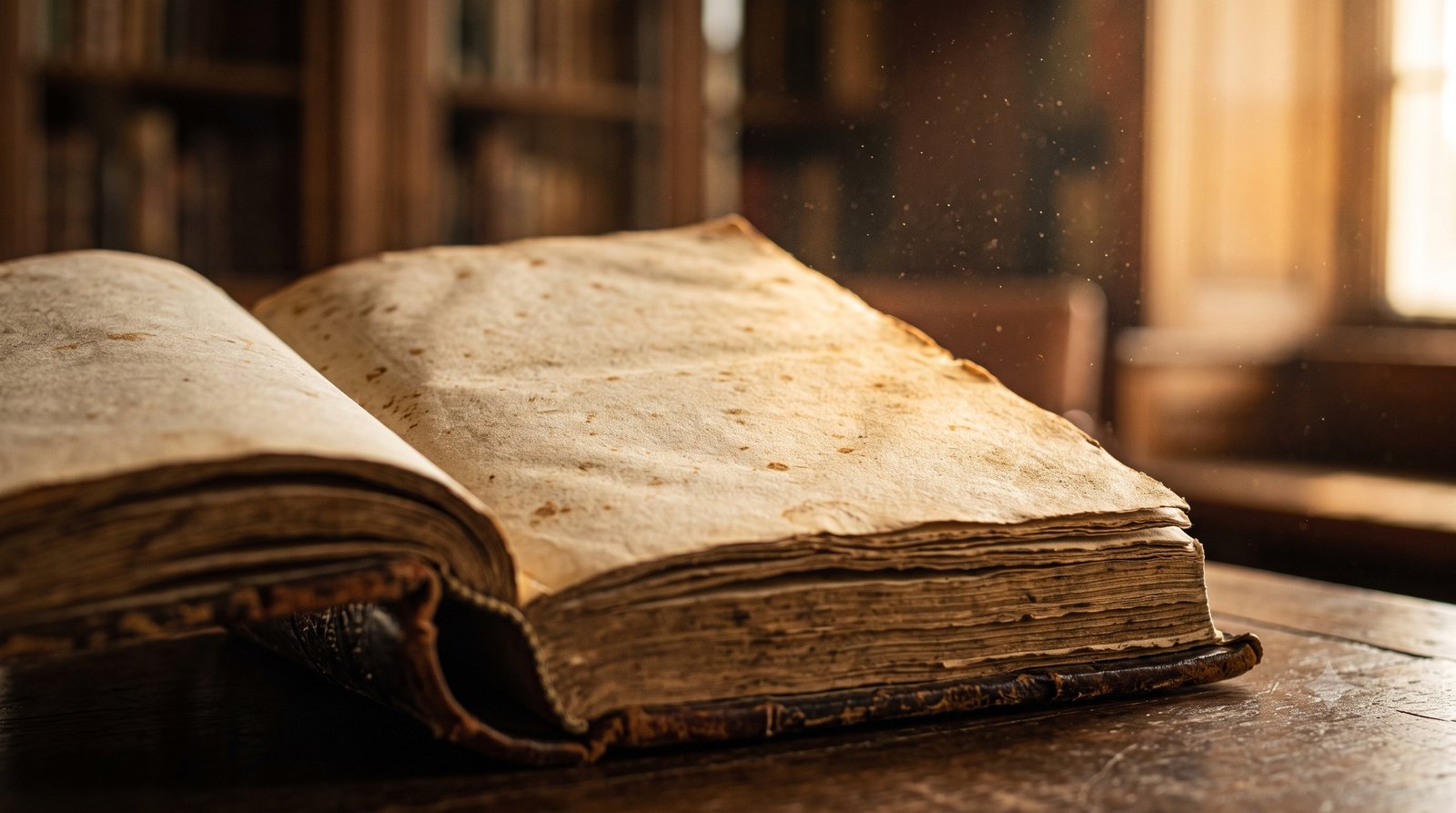
The nostalgic musty-sweet smell of an old book isn't decoration, it's paper literally breaking down, releasing vanillin, benzaldehyde, and furfural, the same aromatic compounds found in vanilla pods, almonds, and caramelized sugar.
Pick up a decades-old paperback and the smell that rises off the page, sweet, warm, a little like vanilla with a hint of almond, feels like something the publisher put there on purpose. It wasn't. That smell is the paper itself decomposing, and the molecules responsible are some of the most familiar in perfumery.
Books are made mostly of cellulose and lignin, the structural compounds in wood pulp. Over years of exposure to air, heat, and light, lignin slowly oxidizes and breaks down, which in turn triggers acid hydrolysis of the cellulose fibers around it. Both processes release a cloud of volatile organic compounds (VOCs), and a handful of those compounds happen to be aroma chemicals well known to any perfumer.
In 2009, a team of conservation scientists led by Matija Strlič published a study in the journal Analytical Chemistry titled "Material Degradomics: On the Smell of Old Books." Using headspace analysis, sampling the air trapped around aging paper rather than damaging the paper itself, they identified the specific VOCs responsible for that characteristic smell, and found they could correlate the exact mix and concentration of those compounds with a book's lignin content, acidity, and degree of cellulose degradation.
Three compounds do most of the work:
- Vanillin, the same molecule that gives real vanilla pods their scent, released as lignin degrades.
- Benzaldehyde, an almond-like note, produced as the paper's fibers break down.
- Furfural, a sweet, bready, almost caramelized-sugar smell, formed by acid-catalyzed breakdown of cellulose and hemicellulose.
Layer those three over a background of mild acidity and trace amounts of dozens of other minor VOCs, and you get the specific, recognizable perfume of an old library, different, subtly, from a used bookstore, which is different again from a single decades-old paperback left in a drawer. Conservators have started using this as a genuinely useful, non-destructive diagnostic tool: instead of testing a fragile historic document directly, they can sample the air around it and estimate its condition and rate of decay from the VOC profile alone. The field even has an informal name for the phenomenon of loving this smell: bibliosmia.
There's also a word for the specific feeling that smell evokes, not just liking it but the wistful, time-worn pull of it: vellichor. It isn't an official dictionary entry, it's a neologism coined by writer John Koenig in 2013 for his project The Dictionary of Obscure Sorrows, blending "vellum" and "ichor." Unlike bibliosmia, which just describes loving the smell, vellichor is about the emotion the smell carries with it, which lines up with real neuroscience: the olfactory bulb has a more direct anatomical link to the brain's memory and emotion centers than any other sense, which is a large part of why an old book can smell like nostalgia itself.
It's a neat reminder that some of perfumery's most familiar materials, vanillin above all, one of the most widely used aroma molecules in the world, turn up in nature in places that have nothing to do with vanilla orchids. A book falling apart on a shelf is, chemically, doing a small, slow impression of a gourmand fragrance.